Austenitic Manganese Steel (Hadfield) Castings
Austenitic Manganese Steel (Hadfield)
It gets harder the more it is struck — a behaviour no other material has
Specialist foundry — Industrial Zone, Abu Zaabal, Qalyubia, Egypt
The American standard for austenitic high-manganese steel castings and their variants.
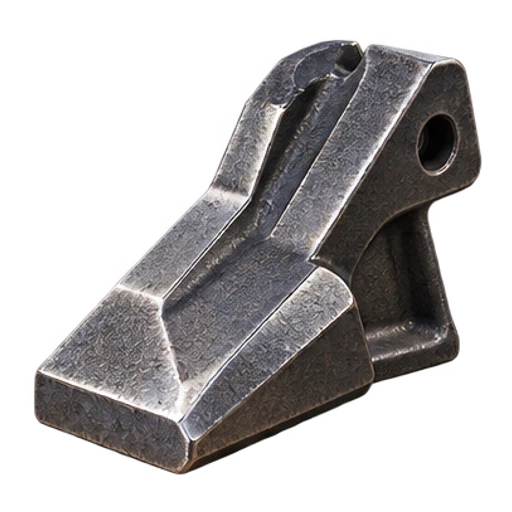
This material works against intuition: it is delivered relatively soft, then its surface work-hardens in service under impact while the core stays tough and absorbs energy. That is why it is the only logical choice in crushers: a hard surface to resist wear, and a non-brittle core that prevents fracture under impact. The fundamental rule in its composition is a manganese-to-carbon ratio controlled precisely by the standard. As a manganese steel foundry, we apply the heat treatment without which its standard properties are never achieved.
The main grades to ASTM A128
| Grade | Designation | Tensile N/mm² | Yield N/mm² | Elongation % | Hardness HB | Structure |
|---|---|---|---|---|---|---|
Grade A The standard, most used grade | ASTM A128 Gr. A | — | — | — | — | Austenitic |
Grade B-2 Lower carbon — higher toughness | ASTM A128 Gr. B-2 | — | — | — | — | Austenitic |
Grade B-3 Higher carbon — higher hardness | ASTM A128 Gr. B-3 | — | — | — | — | Austenitic |
Grade C Chromium added — higher wear resistance | ASTM A128 Gr. C | — | — | — | — | Austenitic + chromium |
A decisive operational point: the property only appears under impact or high pressure. In an application with light sliding friction and no impact, the surface will not work-harden and the material will not deliver its expected performance — and there high-chrome iron is the correct choice.
Chemical composition
Composition is binding here. The manganese-to-carbon ratio is what keeps the structure austenitic at room temperature, and that is the basis of the work-hardening property.
Advantages
- •Self-hardening surface under impact
- •Very high toughness — does not fracture under impact
- •Ductile core absorbs impact energy
- •Long service life in crushers
Limitations and considerations
- •Does not perform without impact or high pressure
- •Very difficult to machine (hardens during cutting itself)
- •Requires precise heat treatment after casting
Common applications
Sectors
International equivalents
Data sources and scope
The values above are taken from standard ASTM A128 and represent the reference standard limits. The actual properties of any delivery are established by the foundry's analysis and test certificate for that specific heat, and are affected by section thickness, casting conditions and heat treatment. Final material approval for any application is subject to a joint technical review with our engineering team.
Need a casting in Austenitic Manganese Steel (Hadfield)?
Send your drawing or sample — our technical team will review it and recommend the most suitable grade.