Chromium Alloy Steel Castings
Chromium Alloy Steel
Steel strength with the corrosion and heat resistance chromium provides
Specialist foundry — Industrial Zone, Abu Zaabal, Qalyubia, Egypt
The American standard covers martensitic corrosion-resistant castings on one hand, and alloy steel castings for pressure and heat service on the other — the difference lying in chromium and molybdenum content.
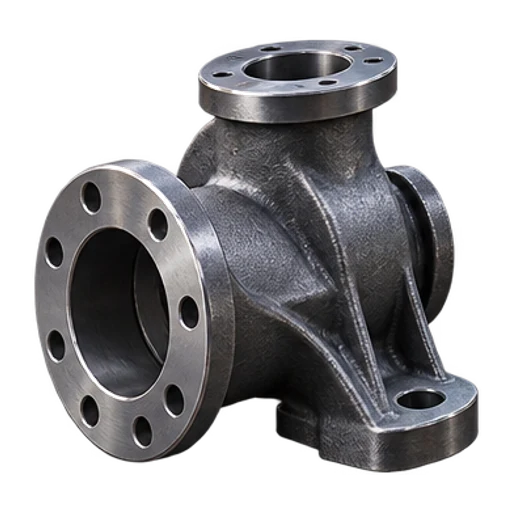
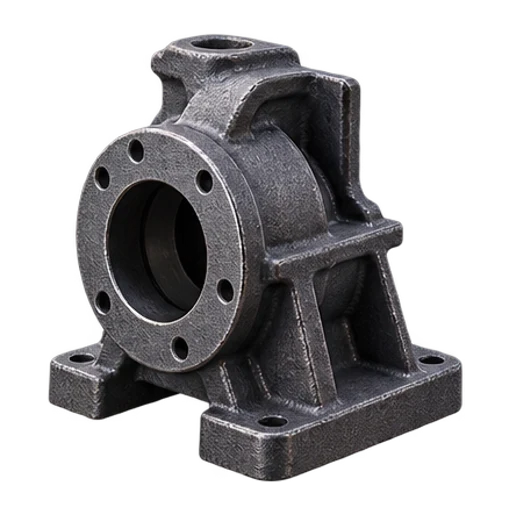
The first thing to clarify: chrome steel is not high-chrome iron. High-chrome iron is a hard, brittle wear material, whereas chrome steel keeps the toughness of steel and its weldability and machinability, with chromium adding corrosion, oxidation and heat resistance that increases with its content. At higher chromium levels the material sits on the boundary of the martensitic stainless family, combining high strength with corrosion resistance. As a chrome steel foundry, we cast its grades to drawing or sample with the required heat treatment specified in the order.
The most common cast chrome steel grades
| Grade | Designation | Tensile N/mm² | Yield N/mm² | Elongation % | Hardness HB | Structure |
|---|---|---|---|---|---|---|
CA-15 High strength + corrosion resistance — pumps and turbines | ASTM A743 CA-15 (GX12Cr12 / 1.4011) | — | — | — | — | Martensitic |
C5 Chromium and molybdenum — heat and pressure service | ASTM A217 Gr. C5 | — | — | — | — | Martensitic / bainitic after treatment |
C12 Higher chromium and molybdenum — higher temperatures | ASTM A217 Gr. C12 | — | — | — | — | Martensitic / bainitic after treatment |
All chrome steel grades are supplied after mandatory heat treatment (normalising / quench and temper) — the properties are not achieved in the as-cast condition alone. Specifying the heat treatment condition and required hardness in the purchase order is essential.
Chemical composition
Composition is binding in the standard, because the chromium content determines the material family and its behaviour: a moderate level for heat service, higher for more severe temperatures, and the highest where corrosion resistance with strength is required.
Advantages
- •Corrosion and oxidation resistance increasing with chromium content
- •Retains strength at elevated temperature
- •Far tougher than high-chrome iron — withstands impact
- •Weldable and machinable (with heat treatment conditions)
Limitations and considerations
- •Higher cost than carbon steel and cast iron
- •Heat treatment after casting is mandatory, not optional
- •Lower abrasive wear resistance than carbide-rich high-chrome iron
Common applications
Sectors
International equivalents
Data sources and scope
The values above are taken from standard ASTM A743 / A217 and represent the reference standard limits. The actual properties of any delivery are established by the foundry's analysis and test certificate for that specific heat, and are affected by section thickness, casting conditions and heat treatment. Final material approval for any application is subject to a joint technical review with our engineering team.
Need a casting in Chromium Alloy Steel?
Send your drawing or sample — our technical team will review it and recommend the most suitable grade.