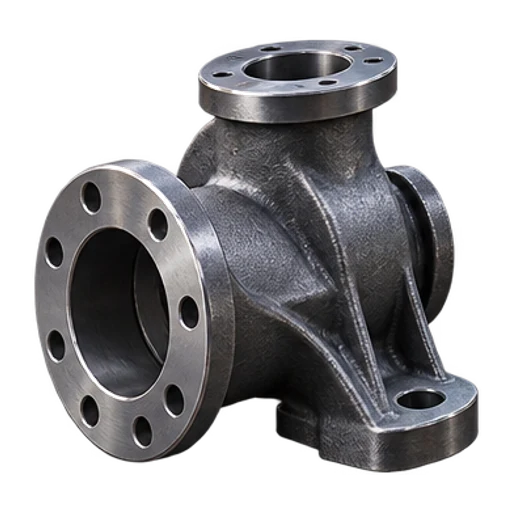
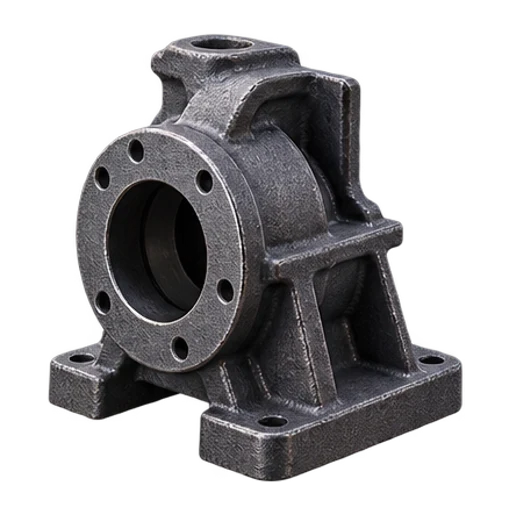
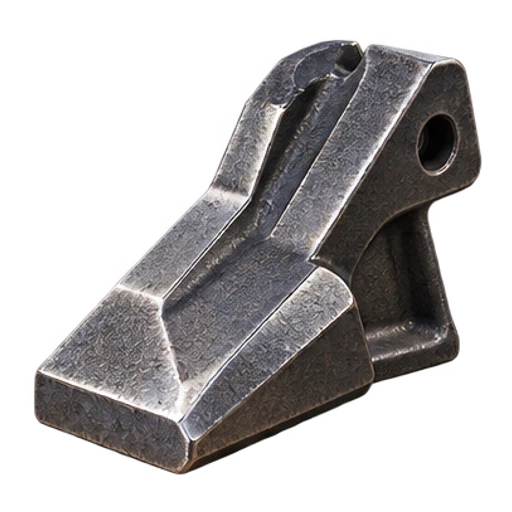
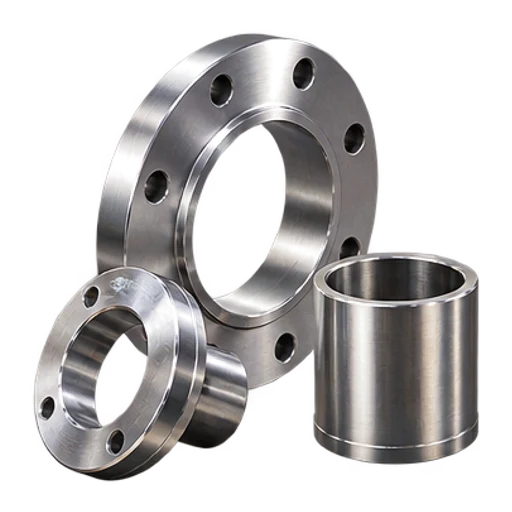
Carbon Steel Castings
Carbon Steel
The structural workhorse — strength, weldability and impact resistance
Specialist foundry — Industrial Zone, Abu Zaabal, Qalyubia, Egypt
Designations of the St family come from the withdrawn German DIN standard and have been replaced by the S family in the European EN standard. These are wrought designations; casting is executed with the corresponding cast equivalent.
Most customers ask for the grade by its old designation because that is what is written on their engineering drawings. It is important to know that these are designations from the superseded German standard, and that their number referred to the minimum tensile strength. When cast, the request is executed with the appropriate cast equivalent while matching the required mechanical properties. As an iron and steel foundry, we cast the grades called for in engineering drawings with their documented standard equivalents.
Old and modern designations and their properties
| Grade | Designation | Tensile N/mm² | Yield N/mm² | Elongation % | Hardness HB | Structure |
|---|---|---|---|---|---|---|
St37 General structural — excellent weldability | S235 (EN 10025) | — | — | — | — | Ferritic / pearlitic |
St44 Between the general and the most-requested grades | S275 (EN 10025) | — | — | — | — | Ferritic / pearlitic |
St52 The most requested in construction | S355 (EN 10025) | — | — | — | — | Ferritic / pearlitic |
St60 Higher loads — harder to weld | E335 (EN 10025-2) | — | — | — | — | Pearlitic |
St70 Highest strength, lowest ductility | E360 (EN 10025-2) | — | — | — | — | Pearlitic |
The governing rule: as carbon content rises, strength and hardness rise while ductility and weldability fall. This is why the general structural grade is the easiest to weld and the safest structurally, while the higher-strength grades need special welding procedures (preheating) if welding is required at all.
Chemical composition
In steel, both mechanical properties and composition are binding in the standard. The S-family designation refers literally to the required yield strength — and that is the figure a structural engineer builds his calculations on, not the tensile strength.
Advantages
- •High strength with good toughness
- •Weldable (in the lower carbon grades)
- •Withstands impact and shock loads
- •Widely available and economical
Limitations and considerations
- •Corrodes without protection or coating
- •Weldability drops sharply as carbon rises
- •Lower vibration damping than cast iron
Common applications
Sectors
International equivalents
Data sources and scope
The values above are taken from standard EN 10025 (wrought) — ASTM A27 / EN 10293 (cast) and represent the reference standard limits. The actual properties of any delivery are established by the foundry's analysis and test certificate for that specific heat, and are affected by section thickness, casting conditions and heat treatment. Final material approval for any application is subject to a joint technical review with our engineering team.
Need a casting in Carbon Steel?
Send your drawing or sample — our technical team will review it and recommend the most suitable grade.